ABB and NVIDIA outline roadmap for industrial physical AI
A new joint white paper from ABB Robotics and NVIDIA argues that the next phase of industrial automation will be driven by Physical AI, combining realistic simulation, synthetic data and continuous learning to create robots that can adapt to changing production environments.
Elena Vasquez — Editor
Manufacturing has relied on industrial robots for decades, but most systems still perform tasks that are carefully programmed and rarely change. ABB Robotics and NVIDIA believe the next generation of automation will be fundamentally different, with robots capable of learning, adapting and responding to changing environments.
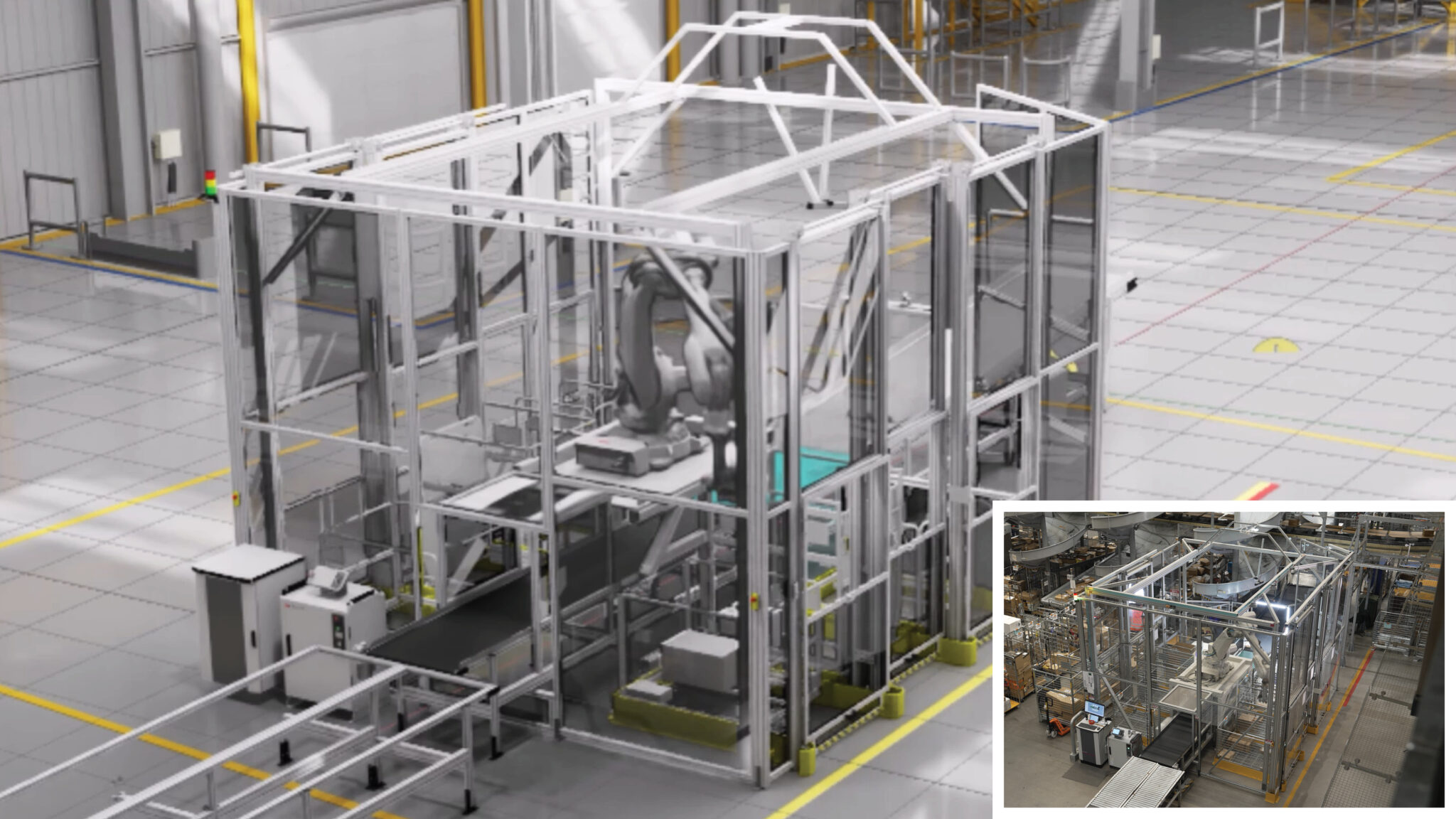
The companies have published a joint white paper describing how Physical AI could move industrial robotics beyond fixed programming by combining digital twins, synthetic data, accelerated computing and AI models within a continuous learning workflow. The goal is to reduce the time and cost required to deploy advanced robotic systems while making them more flexible in real-world production. [oai_citation:1‡Automate](https://www.automate.org/robotics/news/abb-robotics-and-nvidia-white-paper-defines-transformative-impact-of-physical-ai-on-manufacturing?utm_source=chatgpt.com)
The publication builds on the strategic partnership announced earlier this year, which integrates NVIDIA Omniverse technologies into ABB's RobotStudio platform to create highly accurate virtual environments for developing and validating robotic applications before deployment. [oai_citation:2‡NVIDIA Blog](https://blogs.nvidia.com/blog/abb-robotics-omniverse/?utm_source=chatgpt.com)
“Physical AI fundamentally changes what robots do, where they operate and the value they create.”
Craig McDonnell, ABB Robotics
Closing the sim-to-real gap
One of the biggest challenges in robotics is ensuring that systems trained in simulation behave predictably once deployed on the factory floor. Differences in lighting, materials, object behaviour and environmental conditions have traditionally limited how much development can be completed virtually.
ABB and NVIDIA argue that physically accurate digital twins, combined with synthetic training data and continuous feedback from deployed robots, can significantly narrow this "sim-to-real" gap, allowing manufacturers to commission systems faster and with greater confidence. [oai_citation:3‡NVIDIA Blog](https://blogs.nvidia.com/blog/abb-robotics-omniverse/?utm_source=chatgpt.com)
Why it matters
Physical AI has become one of the fastest-growing areas of industrial automation as manufacturers look beyond conventional robot programming towards systems capable of handling greater product variation and increasingly dynamic production environments.
Rather than replacing existing industrial robots, the approach aims to make them more autonomous, allowing manufacturers to introduce new products, adapt production cells and optimise workflows with less engineering effort.
The bigger picture
The white paper reflects a broader shift across the robotics industry towards AI-driven automation. As simulation tools, edge computing and foundation models continue to mature, manufacturers are increasingly looking for platforms that combine traditional industrial reliability with the flexibility of modern AI.
For ABB and NVIDIA, the objective is not simply smarter robots, but a repeatable engineering workflow capable of bringing Physical AI into mainstream manufacturing. [oai_citation:4‡Automate](https://www.automate.org/robotics/news/abb-robotics-and-nvidia-white-paper-defines-transformative-impact-of-physical-ai-on-manufacturing?utm_source=chatgpt.com)
Cite this article
Elena Vasquez. "ABB and NVIDIA outline roadmap for industrial physical AI." Autonomous Systems Review, 6 Aug 2026. https://autonomoussystemsreview.com/articles/abb-and-nvidia-outline-roadmap-for-industrial-physical-ai.